

The Hood joined Marvel Rivals with Season 9.5 on August 7, 2026, bringing a gun-focused Vanguard playstyle built around Demonic Energy, defensive timing, space control, and transformation. He can pressure enemies with his pistols, absorb incoming attacks with Mantle of Oblivion, reshape fights with Abyssal Veil, and automatically enter Half-Demon State once his resource reaches full charge.


The biggest mistake is treating him like a long-range poke hero simply because he carries guns. His primary damage begins falling off at relatively short range, while much of his survivability depends on generating and spending Demonic Energy efficiently. In practice, he fits better as a brawl-leaning Vanguard who wants controlled close-to-mid-range fights, although that description is a gameplay interpretation rather than an official sub-role. Current community discussion has reached a similar conclusion after his release.
Is The Hood Good in Marvel Rivals Season 9.5?
The Hood is worth learning if you want a Vanguard who combines traditional frontline responsibilities with more aim-dependent gunplay. Instead of relying on one permanent shield or simply absorbing damage, he becomes harder to remove when you manage his Demonic Energy, defensive tools, movement, and transformation windows as one connected loop.
He is less attractive for players who want a pure long-range tank or a hero designed to dive the enemy backline on every cooldown. His kit gives him mobility, but using that mobility carelessly can leave him without an escape when the opposing team turns on him.
| Strength | What It Means in a Match |
|---|---|
| Gun-based pressure | Lets Vanguard players contribute consistent ranged damage without abandoning the frontline. |
| Demonic Energy | Rewards sustained pressure and correct defensive timing with a stronger Half-Demon window. |
| Abyssal Veil | Can disrupt enemy damage and healing lines while strengthening parts of The Hood's own kit. |
| Void Walk | Provides repositioning and a way to accelerate the resource cycle. |
| Flexible Team-Ups | Scarlet Witch and Moon Knight push him toward different types of fight control. |
| Demon of the End | Adds piercing offensive pressure while also providing team utility through Bonus Health. |
How Do The Hood's Abilities Work?
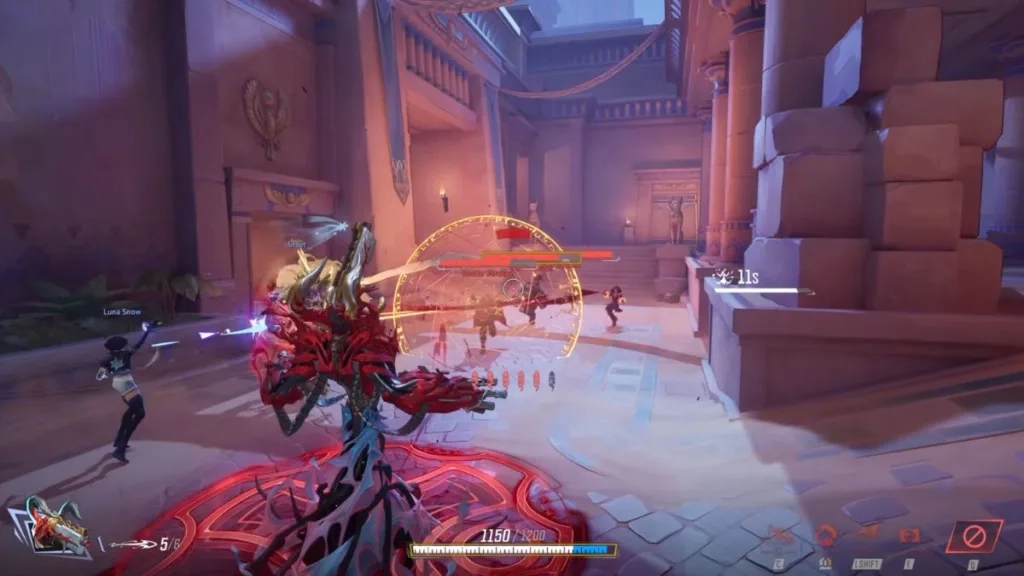
The Hood's kit makes much more sense once you stop looking at each button separately. Accursed Pistols, Mantle of Oblivion, Void Walk, and Ruinous Pact all feed into his Demonic Energy cycle, while Abyssal Veil changes how safely and efficiently he can maintain pressure.
Accursed Pistols
Accursed Pistols are his standard dual-wielded weapons. Once Demonic Energy passes 50%, their firing behavior becomes faster, so reaching the halfway point already improves his neutral pressure before the full transformation arrives.
Current ability data shows that the pistols begin suffering damage falloff at 8 meters and continue losing effectiveness toward 20 meters. That is one of the clearest reasons not to play him like a conventional ranged poke character.
Ruinous Pact and Demonic Energy
Ruinous Pact is the system that ties the entire kit together. The Hood builds Demonic Energy by landing Accursed Pistol shots, blocking attacks with Mantle of Oblivion, and using Void Walk. Reaching full energy automatically pushes him into Half-Demon State.
This means your objective is not simply to survive until a cooldown returns. Good Hood play creates a cycle where offensive pressure and defensive timing both move you toward your next power window.
- Below 50%: focus on safe damage and efficient resource generation rather than forcing a fight.
- Above 50%: your pistols become more threatening, giving you more leverage to contest space.
- At full energy: Half-Demon becomes your opportunity to apply heavier sustained pressure and benefit from the transformed weapon's Lifesteal.
Leaded Transformation
In Half-Demon State, The Hood switches to demonic rifles with faster sustained fire and unlimited ammunition during the transformation. Successful hits also trigger Lifesteal.
The important decision is what happens immediately before the transformation. If you enter the stronger state when you are already isolated, badly positioned, or unable to see a valuable target, much of that window can disappear without producing meaningful pressure.
Mantle of Oblivion
Mantle of Oblivion spreads The Hood's cloak into a spherical defensive barrier that blocks incoming attacks. Its size increases once Demonic Energy is above 50%.
Because blocking attacks also contributes to your resource cycle, Mantle should not be treated as a button to hold whenever damage appears on screen. Saving it for meaningful enemy pressure can simultaneously protect you and move you closer to Half-Demon State.
Abyssal Veil
Abyssal Veil is one of the most important parts of The Hood's space-control game. He throws a dark sphere that creates a Veil at its landing point. His Accursed Pistol shots passing through it generate additional Demonic Energy, while Leaded Transformation bullets passing through gain stronger Lifesteal. Enemy projectiles passing through the Veil suffer reduced damage and healing output, while enemies who cross it take damage and are briefly Blinded.
This makes the ability much more than a damage tool. Place it where both teams actually need to exchange resources: around a choke, objective entrance, frontline lane, or a path the enemy Strategists are using to support their Vanguard.
Void Walk
Void Walk sends The Hood into free-flight before he reappears with a temporary Movement Boost and an area hit around his exit. It also contributes directly to Demonic Energy.
It is tempting to use Void Walk as an engage every time you see a vulnerable backline target. That can work when the enemy is already committed or low on resources, but using your main repositioning tool just to start a neutral fight can be punished hard.
A safer default is to think of Void Walk as your tempo button: it can escape pressure, alter your angle, or help finish an Energy cycle. Community testing has also emphasized how dangerous it can be to use the ability as a blind backline dive.
Demon of the End
The Hood's Ultimate transforms him into his Full Demon State and lets him fire a limited series of powerful shots. These attacks pierce enemies and barriers, and successful hits grant Bonus Health to The Hood and nearby allies. The final shot is stronger than the preceding ones.
That makes Demon of the End more useful than a simple damage Ultimate. A good activation should consider both the enemies lined up in front of you and whether your own team can benefit from the Bonus Health generated during the fight.
What Is the Best Way to Play The Hood?
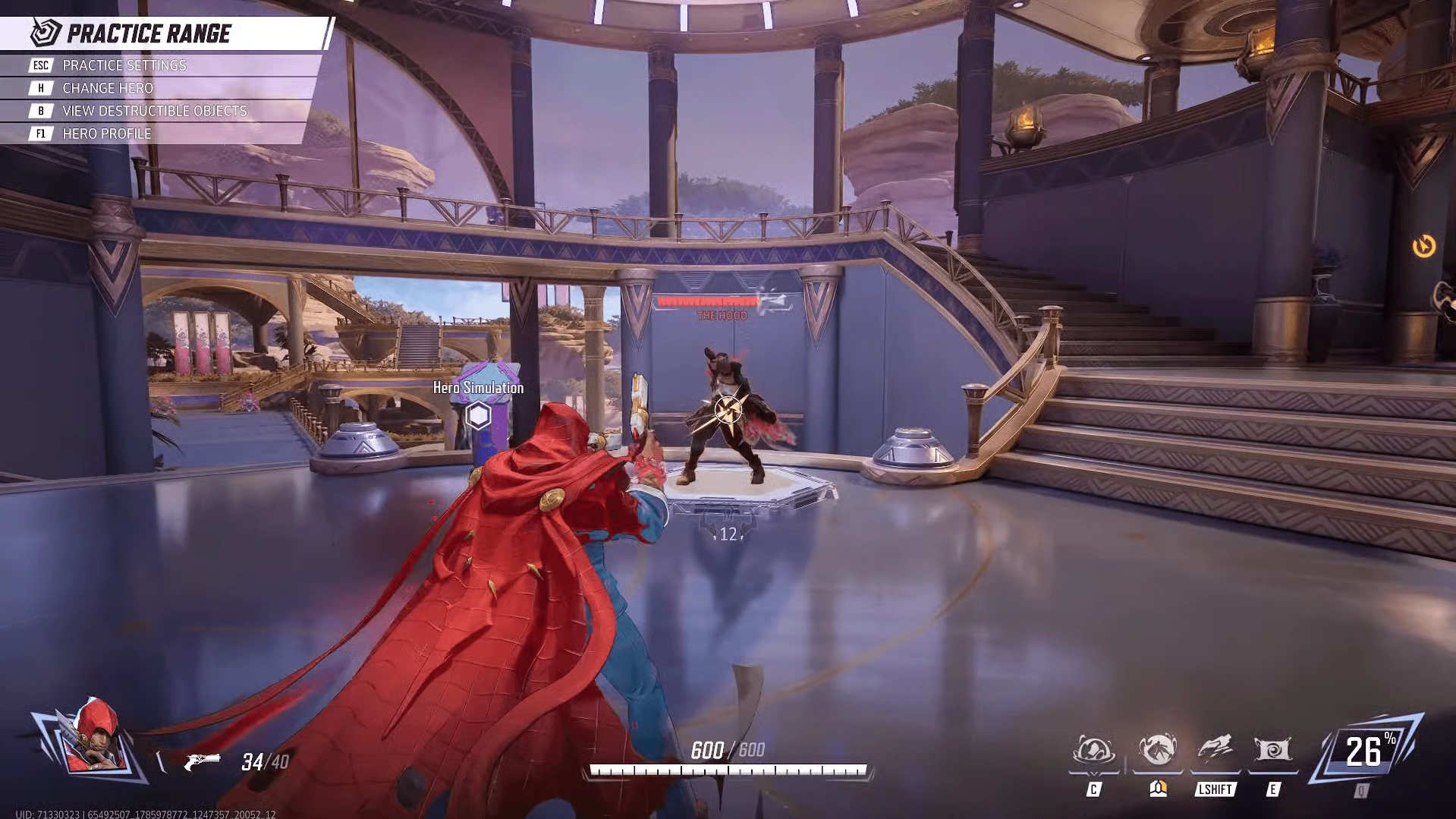
The safest learning rule is simple: take useful space first, build Demonic Energy second, and commit hard when your resources make the fight favorable. Trying to skip directly to the third step is where many new Hood players get punished.
- Start at close-to-mid range. Pressure the enemy frontline or exposed targets without wandering so far forward that your supports lose sight of you.
- Use Abyssal Veil on meaningful lanes. A Veil that nobody needs to shoot or walk through has very little value.
- Build Demonic Energy deliberately. Pistols, Mantle blocks, and Void Walk are all part of the same resource engine.
- Respect the 50% threshold. Once your normal guns speed up, you can increase pressure without immediately gambling your life.
- Prepare for Half-Demon before reaching full Energy. Check targets, cover, support sightlines, and your escape route.
- Use the transformed window to win space. Do not chase one low-health enemy so far that your entire team loses its Vanguard.
Where Should You Position The Hood?
The Hood generally wants to operate where he can threaten enemies without turning his weapon falloff into a permanent damage penalty. Current ability data places the beginning of his primary falloff at 8 meters, which strongly favors fights closer to the frontline than his visual design might suggest.
That does not mean standing directly on top of the enemy Vanguard at all times. His guns, Veil, movement, and barrier give him room to play around the edge of a brawl, shift angles, and punish targets that expose themselves.
- Good positions: objective entrances, short sightlines, corners near your Strategists, and chokes where Abyssal Veil interferes with enemy fire or healing.
- Risky positions: long open lanes where the pistols lose value, isolated flanks with no support access, and deep backline dives that require Void Walk just to reach the target.
- Before using Demon of the End: look for angles that line up multiple enemies without separating yourself completely from nearby allies who can benefit from its defensive utility.
Which Team-Up Should The Hood Use?
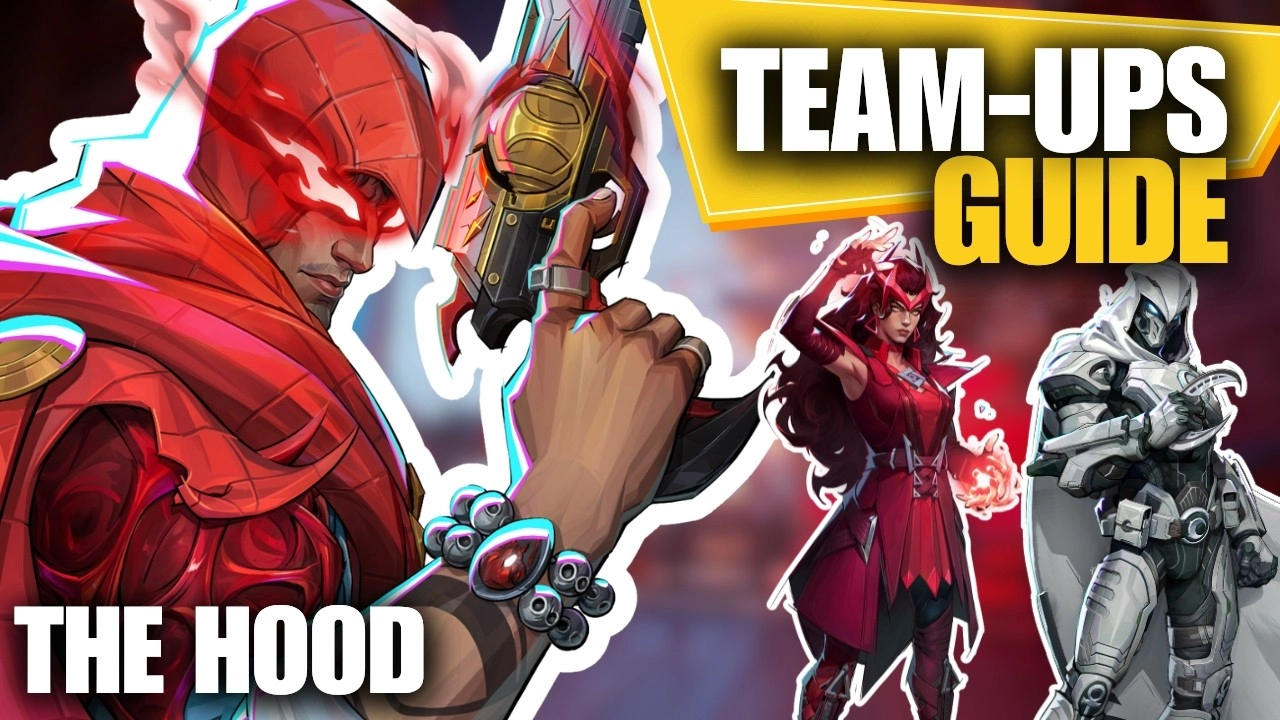
The Hood currently has two especially important Team-Up directions of his own: Chaos Collision with Scarlet Witch and New Moon's Shadow with Moon Knight. They change different parts of his battlefield control, so there is no need to force one universal “best” choice for every composition.
| Team-Up | Partner | Main Benefit | Best Fit |
|---|---|---|---|
| Chaos Collision | Scarlet Witch | Arcane zone, damage/healing reduction and repositioning; enhanced version adds a shockwave after teleporting | More aggressive disruption and engage pressure |
| New Moon's Shadow | Moon Knight | Turns Abyssal Veil into a projectile-blocking Lunar Barrier; enhanced version increases its durability and gives Hood's attacks a bounce effect | Front-to-back fights, chokepoints and projectile protection |
Chaos Collision creates an arcane area that damages enemies while applying stacking Damage and Healing Reduction, and The Hood can reactivate it to teleport to the zone. With Scarlet Witch selected, the enhanced version adds a magical shockwave after the teleport that damages nearby enemies and pulls the fight toward The Hood's position.
New Moon's Shadow instead upgrades Abyssal Veil into a Lunar Barrier capable of blocking projectiles. When Moon Knight is the Team-Up partner, the barrier becomes stronger and The Hood's attacks passing through it gain a bounce effect.
Rather than asking which partner is always best, ask what your team needs. Scarlet Witch gives you another way to disrupt and reposition inside fights. Moon Knight reinforces the part of The Hood's kit that controls a lane and protects a team fighting through incoming projectiles.
What Are The Hood's Most Common Mistakes?
The Hood is mechanically straightforward compared with some of the game's most complicated heroes, but his resource loop creates several easy traps.
- Playing too far away: carrying two guns does not make him a long-range poke Vanguard.
- Using Void Walk only to engage: reaching the enemy is useless if you have no way to survive the response.
- Dropping Abyssal Veil in empty space: place it where damage, healing, or enemy movement actually has to cross it.
- Blocking meaningless poke: Mantle becomes more valuable when it denies an important burst while feeding your Energy cycle.
- Entering Half-Demon with no target: prepare your angle before the transformation rather than after it starts.
- Chasing kills instead of holding space: you are still a Vanguard, even when your transformed weapons make you feel like a Duelist.
How Do You Counter The Hood?
The most reliable counterplay is to make his preferred resource loop awkward. Fighting him from longer sightlines reduces the pressure of Accursed Pistols, while forcing Void Walk early makes aggressive follow-up more dangerous for him.
You should also pay attention to Mantle of Oblivion rather than dumping important damage into it automatically. Once a Hood player has already used key defensive resources, coordinated pressure becomes much more valuable.
Abyssal Veil is another piece of the matchup that should not be ignored. If your team repeatedly shoots, heals, or pushes through the exact lane he has prepared, you are giving his kit the type of engagement it wants. Rotate the angle when possible instead of treating the Veil as decoration.
Against Demon of the End, avoid presenting an easy line of stacked targets. The Ultimate can pierce enemies and barriers, so simply placing more bodies behind the first target does not solve the problem.
Is The Hood Beginner-Friendly?
He is relatively approachable for players who already understand Vanguard positioning but prefer aiming and shooting to melee-heavy tank gameplay. The individual abilities are readable; the harder skill is deciding when to move from safe Energy generation into aggressive pressure.
New players should focus on one habit first: know what your next defensive exit is before committing. If Void Walk is unavailable and Mantle has already been spent, turning a good Half-Demon window into an overextension is very easy.
Do You Need to Buy The Hood?
No. Marvel Rivals was launched with its heroes unlocked and free to play, and NetEase stated that heroes would remain free without requiring unlock purchases. The Hood therefore does not require Lattice or another paid currency to access.
Spending only becomes relevant if you want optional cosmetics. Season 9.5 introduced items such as The Hood's Sinful Blackout Bundle as well as the new PYO Bundle format. Players who are planning cosmetic purchases can check the Marvel Rivals Lattice top-up page, while players focused on free rewards can also follow ongoing events and code releases instead.
Final Recommendation
The Hood is a strong hero to learn if you want a Vanguard with more direct gunplay, flexible space control, and a resource loop that rewards active participation in fights. His pistols may look like an invitation to play at range, but his falloff and Demonic Energy mechanics make controlled close-to-mid-range pressure much more natural.
Start by learning where to place Abyssal Veil and when to preserve Void Walk. Once those decisions become automatic, managing the 50% Energy threshold, preparing Half-Demon windows, and choosing the right Team-Up become much easier. Do not judge the hero only by raw damage—his real value comes from combining pressure, survivability, disruption, and frontline presence in the same fight.
Frequently Asked Questions
When was The Hood released in Marvel Rivals?
The Hood was released with Season 9.5 on August 7, 2026.
What role is The Hood?
The Hood is a Vanguard. His kit mixes gun-based pressure with defensive abilities, Demonic Energy management, transformation, mobility, and space control.
Is The Hood a poke or brawl Vanguard?
NetEase classifies him as a Vanguard rather than giving him an official poke, dive, or brawl subclass. However, his primary damage falloff begins at relatively short range, and early community testing strongly favors a brawl-leaning interpretation rather than playing him as a pure long-range poke hero.
Who can Team-Up with The Hood?
Two important Team-Ups for his own kit are Scarlet Witch through Chaos Collision and Moon Knight through New Moon's Shadow. They emphasize different types of disruption and space control, so the better option depends on the rest of your composition.
Do you need Lattice to unlock The Hood?
No. Marvel Rivals heroes are available without paid hero unlocking. Lattice is relevant to optional cosmetic purchases rather than gaining access to The Hood himself.
What should a new The Hood player practice first?
Practice maintaining useful frontline distance while keeping Void Walk available when a fight becomes dangerous. Once your positioning is consistent, add more deliberate Abyssal Veil placement and Demonic Energy management rather than trying to learn every interaction at once.